When and how to replace evaporative cooler pads
Pads do the cooling. Scale, dry streaks and a sour smell tell you they are finished long before the cabinet looks tired.
Published 4 August 2025 · Updated 3 February 2026
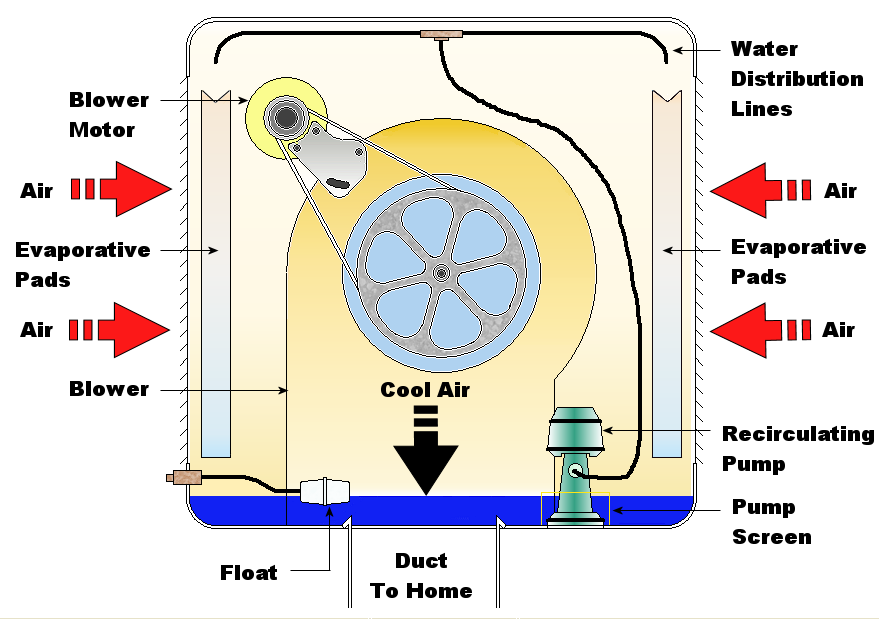
The pad is the only part of an evaporative cooler that actually cools. Everything else — fan, pump, water tray, duct — exists to keep a wet, porous sheet in the path of outdoor air. When that sheet clogs, collapses or wets in stripes, the machine still makes a comforting noise and the rooms stay warm.
A Bonaire or Braemar rooftop unit can look intact from the street while the cellulose inside has turned into a mineral biscuit. Replacement is not a cosmetic service. It is the difference between evaporation and a large, damp fan.
What the pad is doing
Outdoor air is drawn through a wet media. Water on the fibre surface evaporates and takes heat with it. The air that enters the house is cooler and more humid than the air that left the roof. That is the whole machine. A pad that is dry in patches, glazed with scale, or packed with dust is no longer a cooling surface. It is a blockage with a smell.
The media also does a crude filtration job. Insects, grit and some pollen lodge in the wet fibre. That is useful until the same fibre becomes a damp archive of last summer. Fresh air and indoor air quality depend on pads that are wet, intact and not growing anything.
Pad materials you will actually meet
Most Australian ducted units use a corrugated cellulose pad — the honeycombed paper product sold under names such as CELdek and its equivalents. Water is meant to travel down the flutes, wet the faces, and meet air moving across. When the geometry is clean, wetting is even and the pressure drop is predictable.
Older machines and some wall or window units still use aspen, a shredded wood-fibre pad. Aspen is cheap, it wets easily, and it slumps. After a hard season it can sag off the frame, leave gaps at the top, and dump fibres into the tray. Those fibres then travel toward the pump.
A smaller group of pads are plastic or mixed synthetics. They last longer in the brochure and they do not rot in the same way. They also wet differently. If the distributor is even slightly out of level, water prefers a few channels and the rest of the face stays dry.
Portable coolers use thinner pads behind a plastic grille. They clog faster because the face area is small and the tank is a still pond. Treat them as consumables.
How pads fail
The first failure is clogging. Scheme water in Perth, Adelaide and much of inland Australia carries dissolved minerals. As water evaporates, those minerals stay on the fibre. A white or biscuit-coloured crust forms. Air finds the remaining open pores, velocity rises there, and those pores dry and crust even faster. Cooling falls off while the fan sounds the same.
Dust and urban grit add a second layer. A rooftop unit sits in the weather. After a north-westerly the pad can look dirty before it looks scaled. Dirt plus damp is a good recipe for algae and a sour, pondy smell when you lift the lid in November.
Uneven wetting is the failure people misdiagnose as “the cooler is too small”. If the trough or spray bar is blocked, if the pad has slumped, or if scale has dammed half the flutes, you get wet stripes and dry stripes. Dry stripes pass uncooled outdoor air straight into the ducts. Rooms at the end of those ducts feel like the verandah.
Collapsed or torn media is obvious once you look. It is not obvious from the lounge. A gap at the top of a pad is a bypass: the fan will pull uncooled outdoor air through the hole because it is easier than wet fibre.
Signs it is time
Stand under a ceiling outlet on a dry, hot afternoon with the cooler on its usual setting. If the air is warm, or only one side of the house is cool, do not start with the thermostat. Older units often have no useful thermostat anyway — they run until you switch them off. Start with the pads.
Lift the lid when the pump has been running for ten minutes. The faces should be evenly dark with water. Pale vertical streaks are dry channels. A hard white crust that does not darken is scale. Pads that shed grit onto your fingers are finished. A smell of mould or stale pond water is a health problem as well as a cooling one; see asthma, allergies and living with an evaporative cooler.
Water bouncing off the face instead of soaking in is the clearest mechanical sign. The media has glazed. Hosing will not open it. Replacement will.
Inside the house, mineral dust on furniture near outlets is a late sign. The roof inspection is cheaper than another summer of running a blocked machine.
One to three summers, not a lifetime
In hard-water districts, a one-to-three-summer replacement cycle is normal. That is not a sales interval. It is what scale does to cellulose when water is evaporating all afternoon. A well-adjusted bleed, a clean distributor and reasonably soft water can stretch the life of a pad. A unit that never bleeds, or that sits on bore water, can ruin a pad in a single hard January.
Do not count calendar years if the machine barely ran. Count seasons of use, water quality, and what you can see. A pad that looks new and wets evenly can stay. A pad that is two years old and already glazed should go, even if a sticker says it is “good for five years”.
Water quality, scale and bleed-off decide pad life more than the brand on the cabinet. Bleed that runs at about a bucket half full in thirty minutes — the Water Corporation’s rough check for around eleven litres an hour — is doing the pads a favour. A bleed that has been pinched shut to “save water” will save a little water and spend it again on pads, labour and a hotter house.
What a replacement actually involves
Isolate the power. Treat the roof as a workplace, not as a weekend errand. Metal roofs in January are a burn hazard; wet lids are a slip hazard. If you cannot move safely around the unit, stop and ring a technician.
Remove the lid or side panels the way the machine was designed to open. Photograph the pad orientation before you pull anything. Cellulose pads have an airflow direction and a water-flow direction. Install them backwards and you get noise, poor wetting and a short second life.
Lift the old pads out as whole sheets if you can. Crumbs in the tray become pump food. Clean the troughs, the spray bar or distributor, and the tray. Flush until the water runs clear. Check the pump intake for fibre and scale. If the float valve is crusted, clean or replace it; a tray that overfills is a different problem from a pad that will not wet.
Fit the new pads snug to the frames. Gaps at the top are bypasses. Gaps at the sides are bypasses. A pad that has to be crushed to fit will channel water badly. If the size is wrong, get the right size. Australian ducted units from Seeley International (Braemar), Climate Technologies and the rest of the market are not mysterious, but they are not interchangeable by eye from the street.
Run the pump with the fan off and watch the wetting. You want an even darkening, not a waterfall down one corner. Adjust the distributor if the machine allows it. Then run the fan and walk the rooms. The first half-hour of a new pad can smell like wet cardboard. That should fade. A sewer or mould smell should not.
DIY or a technician
DIY makes sense when the unit is accessible, the power is isolated, the pads are a standard size, and you are willing to clean the tray properly. It does not make sense on a two-storey metal roof, on a brittle plastic lid that cracks if you lever it, or when the pump, solenoid or bleed valve also need work.
A technician should also be in the conversation if you have not had a proper pre-summer service for years. Pads are one item. Belts, bearings, water connections and winter covers are others.
Portable and small window units are almost always DIY. Buy the correct pad and rinse the tank.
After the pads are in
Set the bleed. New pads do not exempt you from mineral management. Check wetting again after a week; cellulose can settle. Confirm that ceiling outlets are open and that windows are open enough for the moist air to leave. A new pad in a sealed house will still make the rooms clammy.
If cooling is still poor after a clean, even wet pad, the problem was never the media. Look at airflow, duct leaks, a dying fan, or a house that is losing the fight to an uninsulated roof. Pads cannot outrun physics that lives in the building.
A cooler with honest pads is a simple machine again: wet fibre, moving air, open windows. That is the job. When the fibre stops being honest, replace it.
Frequently asked
- How often should evaporative cooler pads be replaced in Australia?
- In hard-water districts many households change pads every one to three summers. Soft water, a working bleed and even wetting can stretch that. Replace them sooner if they smell, shed grit, or show dry streaks while the pump is running.
- Can I hose pads down instead of replacing them?
- A gentle rinse can lift loose dust at the start of the season. It will not dissolve a mineral crust or restore collapsed fibre. Once water sheets off the face instead of soaking in, the pad is finished.
- Is pad replacement a job for a technician?
- A competent householder can change pads on a small, safe unit with the power isolated. Rooftop ducted machines, brittle lids and anything involving electrics or a ladder on a metal roof are technician work.
More from Care

Care · 21 July 2025
Water quality, scale and bleed-off rates
Bleed-off exists to stop the tank turning into brine. The difference between 11 to 20 litres an hour, 3 litres an hour, and a hose that fills a bucket like a tap is the difference between clean pads and a wasted meter.
Care · 7 July 2025
Troubleshooting a weak, noisy or leaking evaporative cooler
Most rooftop failures are ordinary: dry pads, a blocked filter, a dying pump, a fan out of balance, a tank that overflows, or a musty smell from a cabinet that sat wet all winter.

Care · 23 June 2025
How to winterise a ducted evaporative cooler
An uncovered rooftop cooler is a hole in the roof. Covers, closed ceiling vents and a drained tank stop the house leaking heat all July, and they decide how the unit starts in spring.