Troubleshooting a weak, noisy or leaking evaporative cooler
Most rooftop failures are ordinary: dry pads, a blocked filter, a dying pump, a fan out of balance, a tank that overflows, or a musty smell from a cabinet that sat wet all winter.
Published 7 July 2025 · Updated 3 February 2026
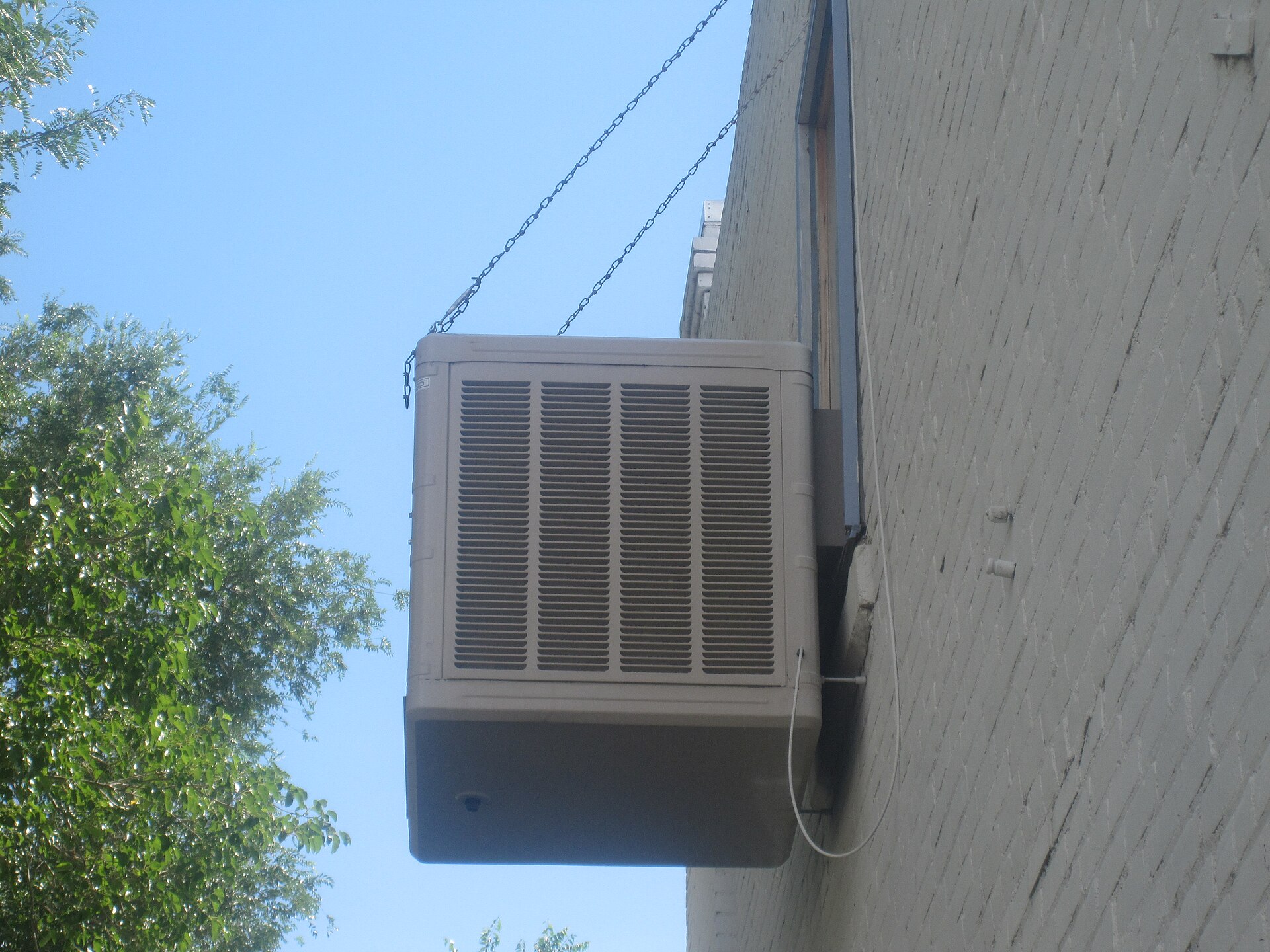
A weak, noisy or leaking evaporative cooler is usually not a mystery. The machine has a short list of parts and a short list of ways those parts fail. Households that jump from "it feels warm" to "we need a new reverse-cycle system" skip the ten-minute diagnosis that would have found a dry pad or a pump full of grit.
Start with the climate, then the water, then the air path, then the noises and the leaks. That order stops you replacing a fan because a humid afternoon had raised the wet-bulb, or calling an electrician because the bleed hose had come off a fitting.
Warm air: dry pads and the water circuit
If the air at the ceiling vent is not cooler than the verandah, look at the pads while the unit is running. They should be evenly dark with water. Dry streaks, dry faces, or a pad that is wet only at the bottom mean the cooling surface is not there. How evaporative cooling works requires evaporation. A dry pad is a filter in a hot breeze.
Causes stack. The pump has failed or lost prime after a winter drain. The strainer is blocked with sludge. The distributor tubes are furred up and water is not reaching the top of the pads. The float valve has stuck shut and the tank is empty. The inlet tap on the roof is still off from autumn. All of these present as "the cooler does not work." None of them is a new technology problem.
If the pads are wet and the air is still warm, you may be in a humidity stall. Fan-only is then the right response, not a new pump. Storm-front afternoons, coastal moisture and a monsoon will all raise the wet-bulb until evaporation cannot do useful work. That is weather. It is also why a machine that sang in Perth dry heat will sulk on a sticky Sydney change.
Clogged pads can look wet and still fail. Scale glazes the surface. Air bypasses through cracks and dry channels. Dust from a western paddock loads the face until the fan is pushing against a wall. Cooling drops. Noise often rises. Replacing cooler pads is the fix when rinsing will not restore an open, even media. In hard-water districts that can be every one to three summers.
Blocked filters, where the unit has them, belong in the same look. A neglected filter starves the fan of air. The motor works harder. Rooms get a trickle. Clean or replace the filter before you decide the fan is dying.
The pump: humming, dry-running, dead
A pump that hums but does not move water is often air-locked, blocked or worn out. Isolate power. Check the strainer. Confirm the pump is actually in water, not perched on sludge above a low tank. After a long idle, a prime may be all it needs. After years of scale, it may need replacing. Pumps are consumables. Treating them as a moral failure is unhelpful.
A pump that has been run dry will often die. That happens when the float sticks, the water is isolated, or someone has drained the tank and then switched the cooler on from the kitchen. Listen. A dry pump sounds wrong. Switch off. Restore water. Replace the pump if it has already cooked itself.
Intermittent wetting — pads that soak then dry, soak then dry — can be a pump on its way out, a flickering solenoid, or a water supply that cannot keep up on a long afternoon. Watch the tank level while the unit runs. If it falls away, the inlet is too slow or the dump is too generous. If it overflows, the inlet is not shutting.
Noise: unbalanced fans, rattles and the driveway test
Stand in the driveway. A healthy cooler has a broadband whoosh. A failing one ticks, grinds, squeals or beats. Ticking against the shroud is often a blade out of true, a nest, or a pad frame that has shifted into the airstream. Grinding is bearings. Squealing can be a belt on older cabinets, or a motor that is no longer happy. Beating, a rhythmic thump, is imbalance: dirt on one blade, water in a hollow, a fan that was knocked in a service and never sat true again.
Isolate power before you poke the fan. Debris comes out. Imbalance sometimes comes out with a clean. Bearings and motors are technician work if you do not already live on roofs. Do not "see if it settles" for a fortnight if the sound is metal on metal. That path ends in a seized fan and a more expensive Saturday.
Duct noise inside the house is a different file. Whistling vents are often closed-down dampers on a system still trying to push full airflow. Rattle in a hallway can be a loose diffuser. A roar in one bedroom and a whisper in another is balancing, not a new fan. Make those adjustments on a dry day with the pads wet, so you are listening to the system as it is meant to run.
Overflows, leaks and the difference from bleed
Water on the roof is not automatically a crisis. Bleed-off is supposed to leave the cabinet. Older systems often dump 11 to 20 litres an hour; some newer ones around 3. Water Corporation's household check still holds: a bucket half full in 30 minutes is about 11 litres an hour. That water should go to a drain or a lawful garden point, not into the ceiling cavity.
Overflow is different. If the tank is pouring from the overflow spigot whenever the pump runs, the float is set wrong, stuck, or the dump valve is open. If a hose has split, the roof and the ceiling will tell you. If the cabinet rust has opened a seam, you have a replacement conversation, not a clamp conversation. Water staining on a bedroom ceiling is urgent. A wet patch around a correctly plumbed bleed is a measurement, not an emergency.
A leaking inlet solenoid, a weeping isolation tap, or a winter drain left cracked will also present as "the cooler leaks" in a month you are not using it. Winterising — cover on, vents closed, water isolated — prevents some of these. Troubleshooting in July should start with: is this unit even supposed to have water in it?
Musty smell, health and when to stop
The first run of the season often smells like a wet cupboard. That should fade. A smell that persists, or that hits like a compost heap, is growth in the tank and pads. Do not "run it through" over people who are already sensitive to damp air. Clean the tank. Replace the pads. If the ducts themselves smell, the problem has been left long enough to colonise the ceiling. That is more than a pad change.
Musty air is a maintenance failure with a health edge. This desk does not diagnose asthma. It does say that delivering biological film into bedrooms is not a cooling strategy. Fresh outdoor air is the point of the machine until the cabinet contaminates it.
Bushfire smoke is a stop, not a troubleshooting puzzle. If the sky is brown, switch the unit off. The fan will pull the plume inside whether the pads are wet or dry. Weak cooling on a smoky day is not a pump fault.
Portable machines throw a smaller version of the same list. A 25 square metre room unit with a dry filter and a tank full of yesterday's water will smell, drip and blow warm air for the same reasons a rooftop box does. Empty the tank. Clean the filter. Put it in a room that can exhaust. It will still not refrigerate a sealed lounge.
When the pads are wet, the pump is pumping, the fan is quiet enough, the tank is holding, and the air is still warm, you have probably met the climate. Count the electricity and water you are spending on a humid afternoon, switch to fan-only, and wait for the air to dry. The useful diagnosis is the one that names the actual fault, including the fault of running wet pads in the wrong weather.
Frequently asked
- Why is my evaporative cooler blowing warm air?
- Common causes are dry pads, a failed pump, air bypassing clogged media, or humidity so high that evaporation cannot work. Check water at the pads before you blame the climate or the fan.
- Why does the cooler smell musty when I turn it on?
- Stagnant water and dirty pads grow a film in a dark cabinet. Drain and clean the tank, replace sour pads, and do not run that air through bedrooms as a way of airing the unit out.
- Is a leaking cooler always an emergency?
- Water in the ceiling is urgent. A bleed hose dripping into a gutter at the published rate is normal. An overflowing tank or a split hose is a fault. Look at where the water is going before you shut the street tap.
More from Care
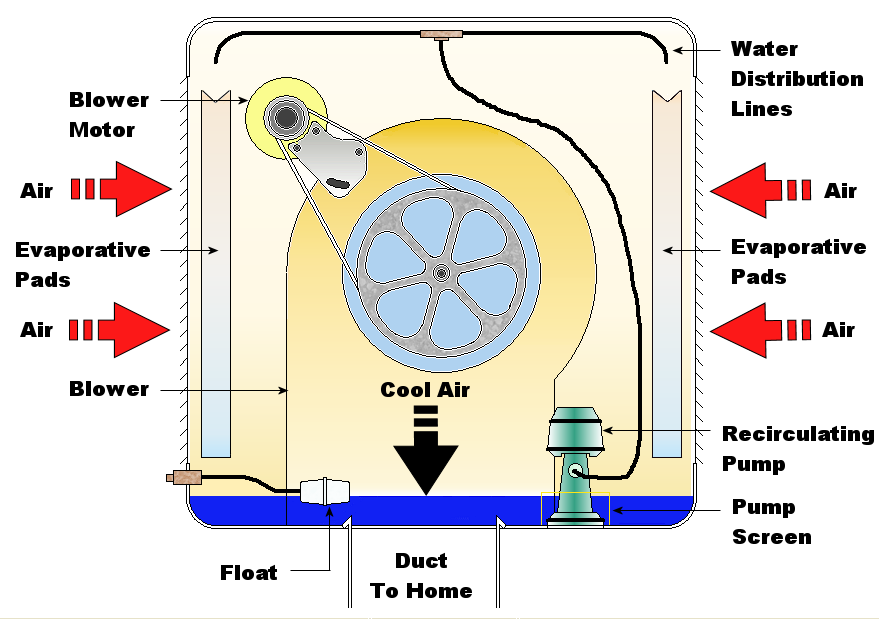
Care · 4 August 2025
When and how to replace evaporative cooler pads
Pads do the cooling. Scale, dry streaks and a sour smell tell you they are finished long before the cabinet looks tired.

Care · 21 July 2025
Water quality, scale and bleed-off rates
Bleed-off exists to stop the tank turning into brine. The difference between 11 to 20 litres an hour, 3 litres an hour, and a hose that fills a bucket like a tap is the difference between clean pads and a wasted meter.

Care · 23 June 2025
How to winterise a ducted evaporative cooler
An uncovered rooftop cooler is a hole in the roof. Covers, closed ceiling vents and a drained tank stop the house leaking heat all July, and they decide how the unit starts in spring.