What to look for when buying an evaporative cooler
A useful quote names airflow, water management, pad type and who will service the roof. Brand names describe the Australian market; they are not a ranking.
Published 17 February 2025 · Updated 3 February 2026

Buying an evaporative cooler is less like choosing a television and more like hiring a small piece of roof plumbing. The box matters. The water, the pads, the ducts, the holes in the ceiling and the person who will climb up in January matter more. A low price for a large-looking unit is easy to print. A system that still throws cool air in the far bedroom in the third summer is harder.
This is not a brand shoot-out. In much of dry Australia the rooftop market has long been populated by familiar names — Bonaire, Braemar from Seeley International, Climate Technologies — alongside imports and commercial specialists. Those names are useful as a map of who still stocks parts and trains installers. They are not a ranking, and a publicist’s “best of” list is not a specification.
Start with climate and the house. If you are on a humid coast, stop; a portable in one room is the most the physics will give you, and even that is a fan with a wet sock. If you are inland or on a dry southern or western plain, keep going. Where the climate works is the first filter. Sizing on airflow rather than a square-metre sticker is the second.
What a quote should actually say
Ask for the quote on one page you can hold. Model and claimed airflow in litres per second. New ducts or reuse of the old ones, with a note on their condition. Number and location of ceiling vents. Electrical work, including whether the circuit and isolator are new. Water connection, drain and bleed. Pad type. Controller. Winter cover. Warranty on the unit and on the labour. What happens in the first summer if a pump dies.
A quote that only says “supply and install evaporative cooling to residence” is an invitation to argue later. The arguments are predictable: the far room never cooled, the ducts were crushed, the bleed was never connected, the old vents were left painted shut, the cover was “optional” and is now a site visit.
Price the water path as carefully as the fan. A unit that evaporates well but dumps bleed onto a neighbour’s roof, or has no sensible drain, will become a maintenance object. In towns that remember restrictions, a water-management system is not a gadget. It is how you keep the pads from salting up without running a hose like a leaking tap.
Water management, bleed and hardness
Bleed-off exists because the pads concentrate whatever was in the mains. Older systems often dump 11–20 litres per hour. Newer kits can be closer to 3 litres per hour. Water Corporation’s field check — a bucket half full in 30 minutes, about 11 litres per hour — is still a useful way to see whether a bleed is real or a closed valve behind a fascia.
Hard water shortens pad life. If your kettle crusts, your cooler will too. Ask what the installer does in hard-water suburbs: bleed rate, a management valve, and how often they expect to replace pads. Do not accept “the pads last years” as a promise in a limestone or bore-water street.
Some households reuse bleed on a garden that is not used for food. That is a local habit, not a reason to skip bleed. Unbled water will scale the distributors until the top of the pad is dry and the bottom is a swamp. The air then bypasses the wet face and you have bought a noisy humidifier.
Mains connection should have an isolating tap you can reach without a roof walk. A failed float at 2 am is a water bill and a stained ceiling if nobody can find the stop.
Pads, motors and the box on the roof
Pads are the heat exchanger. Aspen and various synthetic media all work when they are wet, clean and evenly fed. They fail the same way: dust, scale, collapse, dry streaks. Ask what pad the unit ships with, whether it is still available, and the labour to change it. A fancy cabinet with an orphan pad is a future problem.
Look at how the water is distributed across the top of the pad. A clogged channel is how one face cakes and the opposite face stays dry. You will not see this from the driveway. You can ask the installer to show you a unit they serviced last year.
The motor and fan should be serviceable. A sealed, inaccessible assembly looks neat on a rendering and expensive when it fails in a heatwave. Ask how the fan is removed, and whether a common replacement is stocked locally. Country towns live or die on that answer.
Noise is a specification. A unit over a bedroom will be the one you hear at 11 pm. Ask where it will sit relative to sleeping rooms and the neighbour’s deck, and whether a different roof location is possible. Moving it two metres at install is cheap; moving it in February is not.
Controller, thermostat and the winter cover
Many older evaporative coolers have no useful thermostat. They run until you switch them off. Newer wall controllers can add timers, pump delay and, on some models, a crude temperature hold. None of them turn the machine into reverse-cycle air conditioning. If the sales pitch leans on “set and forget”, ask what happens when the wet-bulb rises. The honest answer is: you open more windows or you switch to fan-only.
A pump-delay that wets the pads before the fan starts will throw less warm air down the ducts at first start. A dump or dry-out cycle at the end of the day keeps the trough from sitting stale. These are small features. They are also the difference between a unit that smells in March and one that does not.
The winter cover is not optional in a climate that has a winter. Leaves, rain and birds will find an open cabinet. Ceiling vents should close so the house does not leak warm air up the stack. Ask who fits the cover, who removes it, and whether that visit is in the first-year price. A cover left in the garage is not a cover.
Questions for the installer
Who will be on the roof — the person who quoted, or a subcontracted crew you will never see again? How many evaporative jobs did they finish last summer in your suburb, not in the state? Can they name a house two streets away they installed three years ago? What is the response time when the pump fails on a 42 °C Saturday?
Ask them to walk the house and point at relief openings. If they never mention open windows, they are installing a refrigerated habit onto an evaporative machine. Ask them to look in the roof at existing ducts before they commit to reuse. Ask how they will flash the roof and who is responsible if it leaks. Ask whether the electrical circuit is adequate, and whether a new isolator is included.
For a workplace or a shed, the questions grow: airflow in the occupied zone, relief at height, a pad-service roster, and whether heat is being treated as an occupational issue. That is a commercial system, not a larger house quote.
Warranty paper is only as good as the dealer who answers the phone. Prefer an installer who stocks the common failures — pump, float, controller — over a slightly cheaper box from a van that will not return. Parts for the long-running Australian brands are generally findable; obscure imports can be a photograph and a six-week wait.
Pay for the water path, the pads, the ducts and the person who will come back. The cabinet on the corrugated roof is the part the neighbours see. It is not the part that keeps the house honest through summer.
Frequently asked
- Which brand of evaporative cooler is best in Australia?
- There is no honest ranking in this journal. Bonaire, Braemar from Seeley International, and Climate Technologies are the names you will meet on most suburban roofs; they describe the market, not a scoreboard. Compare airflow, water management, pad type, controller, warranty and the installer who will come back in January.
- What should be written on the quote besides the price?
- Airflow in litres per second, pad type, whether a water-management or bleed kit is included, controller type, winter cover, duct work (new or reuse), electrical work, water connection, and what the first-year service includes. If those lines are missing, you are buying a box, not a system.
- Do I need a winter cover?
- A rooftop unit that sits uncovered through a wet winter fills with leaves, and the pads stay damp. A fitted cover and closed ceiling vents keep debris out and stop the house leaking warm air up the ducts. Ask whether the cover is in the price and who puts it on and takes it off.
More from Systems
Systems · 3 February 2025
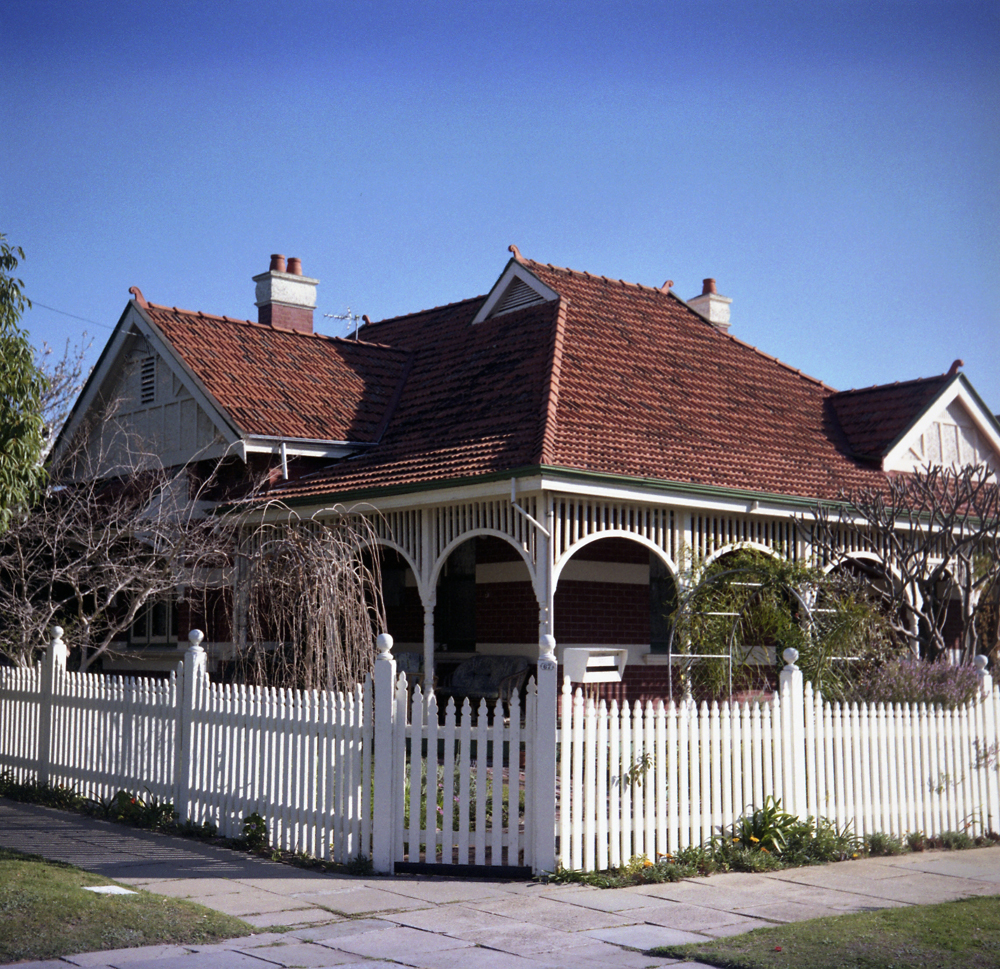
How to size an evaporative cooler for an Australian house
Floor area is a starting guess, not a size. Airflow, ceiling height, insulation and leaky ducts decide whether a rooftop unit can actually cool the rooms you live in.
Systems · 20 January 2025
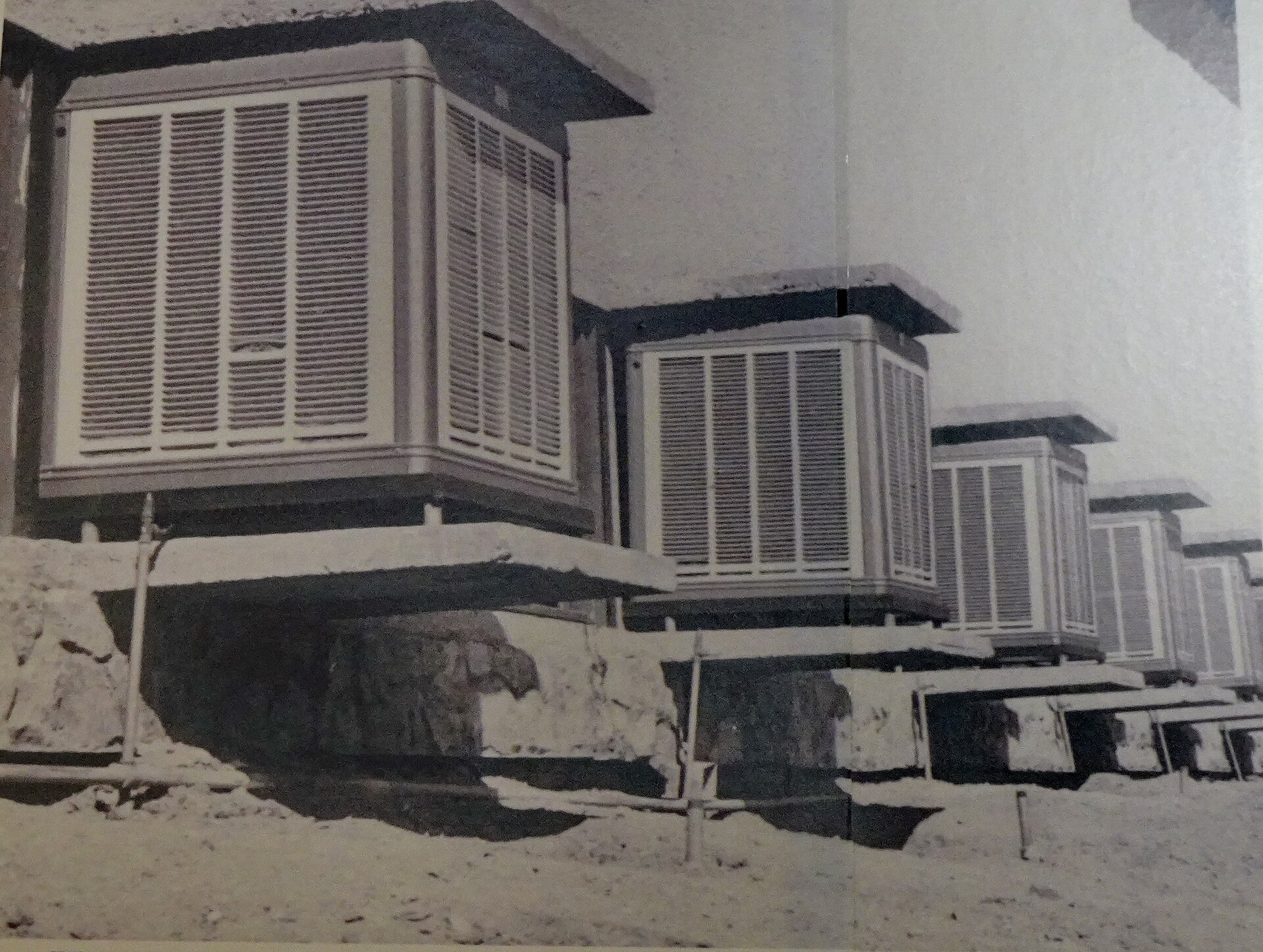
Commercial evaporative cooling for sheds, warehouses and workplaces
High-volume sheds and warehouses can still be cooled with wet pads if the air can leave, the pads are serviced, and heat is treated as an OH&S problem rather than a comfort extra.
Systems · 8 January 2025
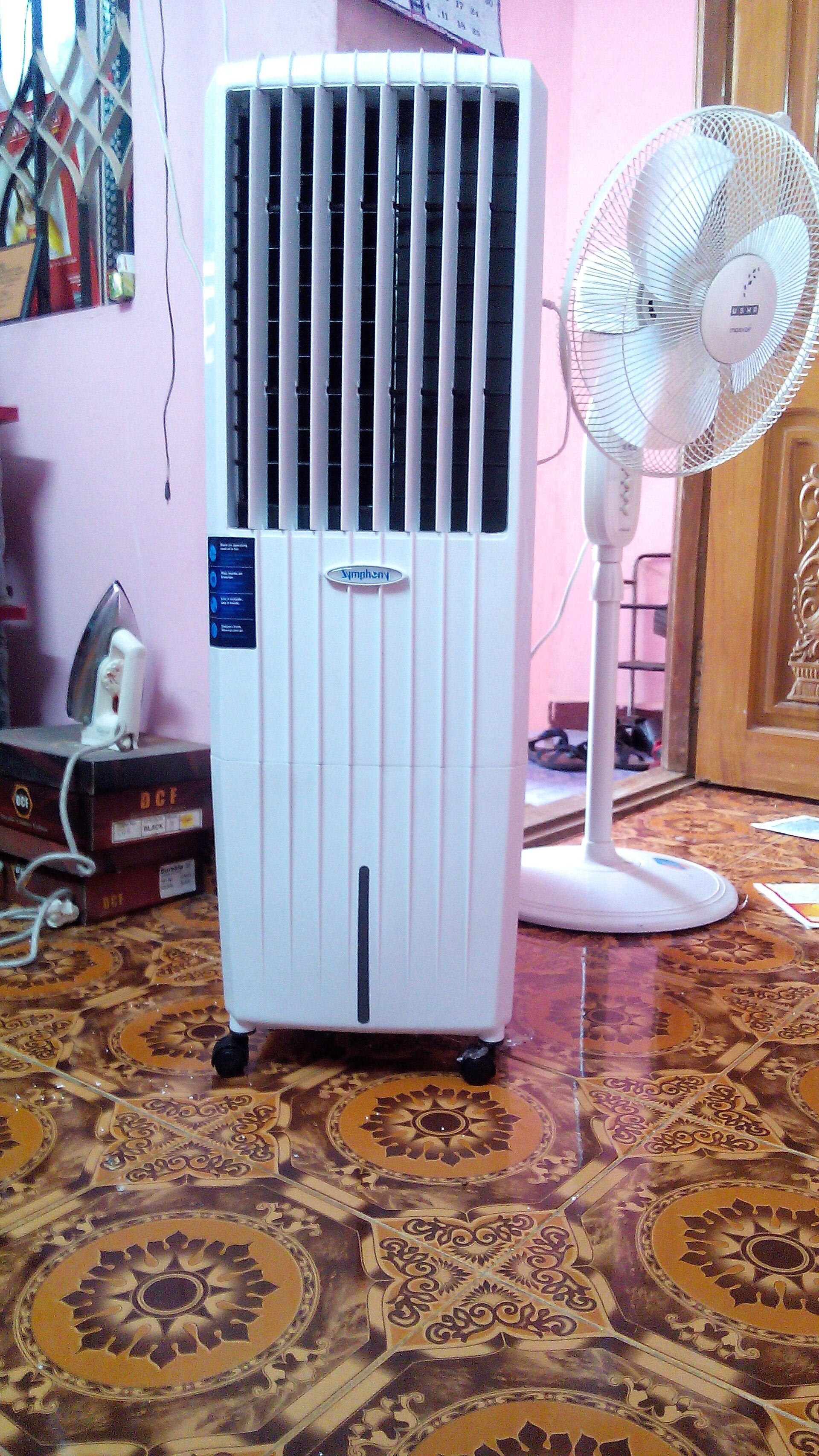
Window and wall evaporative cooling units
A through-wall or window evaporative cooler sits between a portable and a ducted roof system: roughly 30 to 50 square metres, a hole in the masonry, and a noise profile the neighbours will have an opinion about.