Window and wall evaporative cooling units
A through-wall or window evaporative cooler sits between a portable and a ducted roof system: roughly 30 to 50 square metres, a hole in the masonry, and a noise profile the neighbours will have an opinion about.
Published 8 January 2025
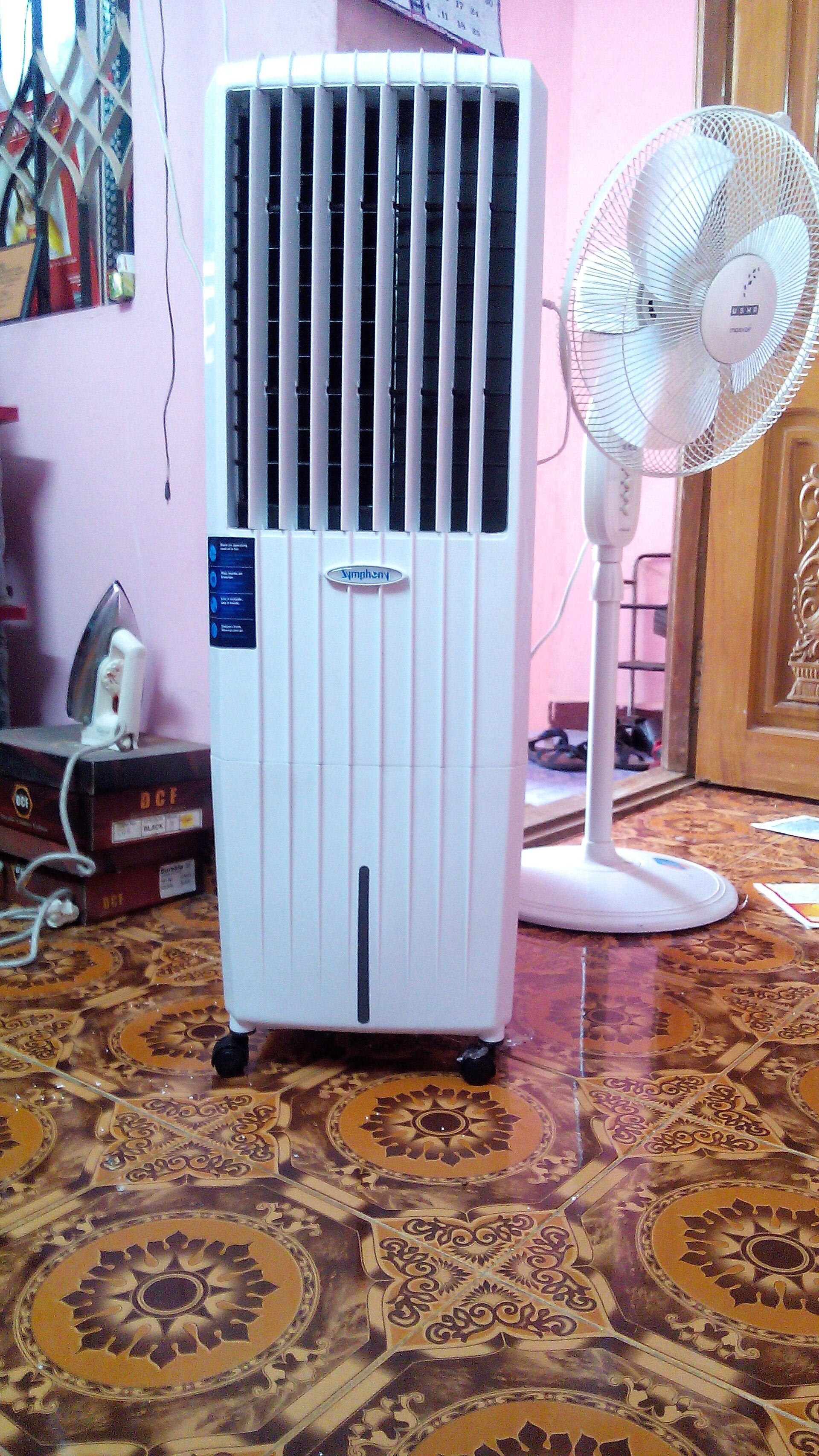
Window and wall evaporative coolers occupy the awkward middle of the Australian kit list. They are too serious to live in the appliance aisle next to a fan, and too local to cool a whole house. They punch a hole to outdoors, wet a pad, and throw air into one or two rooms. Done properly in a dry climate, they beat a portable because they can actually see outdoor air. Done as a cheap hole in a humid flat, they are a noisy way to wet the plaster.
The working size band is about 30 to 50 square metres. That is the public, household-scale figure, not a promise that a west-facing open-plan with a mezzanine will behave. Treat it as “bigger than a study, smaller than the whole brick veneer”.
What the machine is, physically
A window unit sits in an opening, as old refrigerated window-boxes did, with the pads and water on the outdoor side of the wall and the fan discharging in. A wall unit is the same idea with masonry instead of a sash: a sleeved hole, flashing, a drip of water to manage, and a cabinet that will live with sun on one face and a living room on the other.
Air should be outdoor air. That is the advantage over a portable. The wall is doing what a portable user is always improvising with a half-open sliding door. Water is still evaporated into the supply stream, so the room still needs a way for moist air to leave — another window, a door chain, a path through the house. A wall unit in a sealed studio is an improvement on a portable in the same studio. It is not a reverse-cycle split.
Some indoor “standing” coolers look like wall units and are, in truth, portables with better furniture. If there is no penetration to outdoors, you have not escaped the sealed-room problem. Judge the air path, not the height of the plastic.

Installation through masonry, timber, and other optimism
Cutting brick or masonry is a building job. Lintels, cavity ties, damp-proof courses, and the little matter of holding the weather out after you have invented a new window are all in play. A sleeve should pitch water the right way. Flashings should belong to this wall, not to a YouTube of a different continent. The drip tray or drain should not argue with the skirting.
Weatherboard and lightweight cladding are not automatically easier. You still have structure, insulation, a vapour story, and a hole that will whistle in a south-westerly if the unit is removed in winter and the cover is a bit of foam.
Window installations need a sash that can take the weight and a sealing job that does not turn the rest of the window into a leak. Security is now a conversation: you have put a removable appliance in an opening. Screens, locks, and whether the unit can be levered from outside are not paranoid add-ons in some streets.
Strata, heritage, and rented masonry are political before they are technical. A body corporate that already hates split-system condensers on balconies will not necessarily love a wet box in a window. Ask. A bond hearing is a dear way to learn about unapproved penetrations.
Electrical work should be a proper circuit, not a trailing lead across a walkway to a powerboard under a curtain. Water should be a deliberate fill — mains with a valve you can isolate, or a tank you accept you will carry — not a garden hose jammed in a filler and left to the float’s reputation.
Noise, vibration, and the neighbour
These units put a fan at the perimeter of the room. That is acoustically ruder than a ducted rooftop unit whose fan is above a corridor of insulation, and ruder than a portable you can wheel into the laundry when you have had enough. You will hear it. People on the other side of a narrow path may hear it too, especially at night with the pads dripping and the fan on high.
Vibration through a poorly packed sleeve becomes a wall drum. Rubber, a level install, and not using the brickwork as a sounding board are cheaper than an argument. If the only place the hole can go is the head of the bed, reconsider the whole strategy. Sleep against a centrifugal fan is a personality type, not a default.
Outdoor noise is the intake and the pump. Indoor noise is the discharge. A unit that looks modest on a spec sheet can still make conversation work at a slightly higher volume. Listen to one running, in a room, before you cut the wall. Brochures are quiet. Motors are not.
When a wall unit beats a portable
When you can have a real outdoor-air intake. That is the headline. A portable in a sealed lounge humidifies the furniture. A wall unit can pull dry outdoor air through pads and push it in, which is the actual cycle.
When the room is in that 30 to 50 square metre band and you do not want ducts. A granny flat, a converted garage, a shopfront, a single living room in a house whose roof cannot take another appliance, a rental you are allowed to alter (rare) or a house you own but will not duct.
When you are tired of lifting water. A plumbed wall unit still uses water — it must — but it does not depend on you remembering a ten-litre jug every two hours. You still isolate the water in winter. You still service the pads. You do not live next to a camping tank.
When the portable’s casters have become a trip hazard and the overflow has already had one conversation with the floorboards.
A wall unit does not beat a portable on humid days, in smoke, or in a room with no exhaust. Those failures are evaporative, not format-specific. Fan-only or off, as always. It also does not beat a portable on “I might move house in six months and take it with me”, unless you enjoy making good a hole.
Water, winter, and the hole you now own
Water use is lower than a whole-house rooftop machine and higher than a fan. You are still evaporating, and you may still bleed. Scale on a small pad is the same chemistry as scale on a large one, just closer to your pillow. Pad care still decides whether next January smells like wet cardboard.
In winter you have a penetration. Either the unit stays and is covered and sealed against draughts, or it comes out and the hole is closed with something that is actually weatherproof. A bit of plywood and good intentions is how living rooms acquire a whistle and a mould line.
Overflow in a wall installation has less forgiveness than a bleed hose on a roof. Indoor leaks are indoor. Trace the drain before the first heatwave, not during it.
How this sits against the rest of the kit
Portable: small rooms, no hole, maximum compromise, about 25 square metres if you are lucky and dry and open a window.
Window and wall: a hole, a local climate machine, 30 to 50 square metres, installation as a building task, noise at the perimeter.
Ducted rooftop: the house, the roof structure, the ducts, the winter cover, the open-window habit as a whole-dwelling practice.
Reverse cycle: sealed rooms, humidity the other way, winter heat, smoke days.
A wall evaporative unit is worth owning when the climate is dry, the room is the right size, and you are prepared to treat masonry as part of the purchase. It is not a stealth air conditioner. It is a pad and a fan with a dedicated gulp of outdoor air, which is already more honesty than a lot of the portable market manages. Cut the hole only if you are willing to own it in July as well as in January.
Frequently asked
- How big a space can a wall evaporative cooler handle?
- Public guidance for window and wall units sits around 30 to 50 square metres of suitable room, in dry weather, with somewhere for the moist air to leave. That is more than a portable and much less than a ducted rooftop system.
- Do I need council approval to cut a hole for a wall cooler?
- Maybe. It depends on the building, the wall, heritage overlays, strata by-laws and whether you are altering a weatherproof envelope. Ask before the saw comes out. A neat hole in brick is still a hole in the house.
- Why choose a wall unit over a portable evaporative cooler?
- Because it can take outdoor air from outside the wall instead of recirculating a sealed room, it usually moves more air, and you are not emptying a tank every few hours. You pay for that with installation, noise at the opening, and a winter hole to think about.
More from Systems
Systems · 17 February 2025
What to look for when buying an evaporative cooler
A useful quote names airflow, water management, pad type and who will service the roof. Brand names describe the Australian market; they are not a ranking.

Systems · 3 February 2025
How to size an evaporative cooler for an Australian house
Floor area is a starting guess, not a size. Airflow, ceiling height, insulation and leaky ducts decide whether a rooftop unit can actually cool the rooms you live in.
Systems · 20 January 2025
Commercial evaporative cooling for sheds, warehouses and workplaces
High-volume sheds and warehouses can still be cooled with wet pads if the air can leave, the pads are serviced, and heat is treated as an OH&S problem rather than a comfort extra.