Commercial evaporative cooling for sheds, warehouses and workplaces
High-volume sheds and warehouses can still be cooled with wet pads if the air can leave, the pads are serviced, and heat is treated as an OH&S problem rather than a comfort extra.
Published 20 January 2025 · Updated 3 February 2026
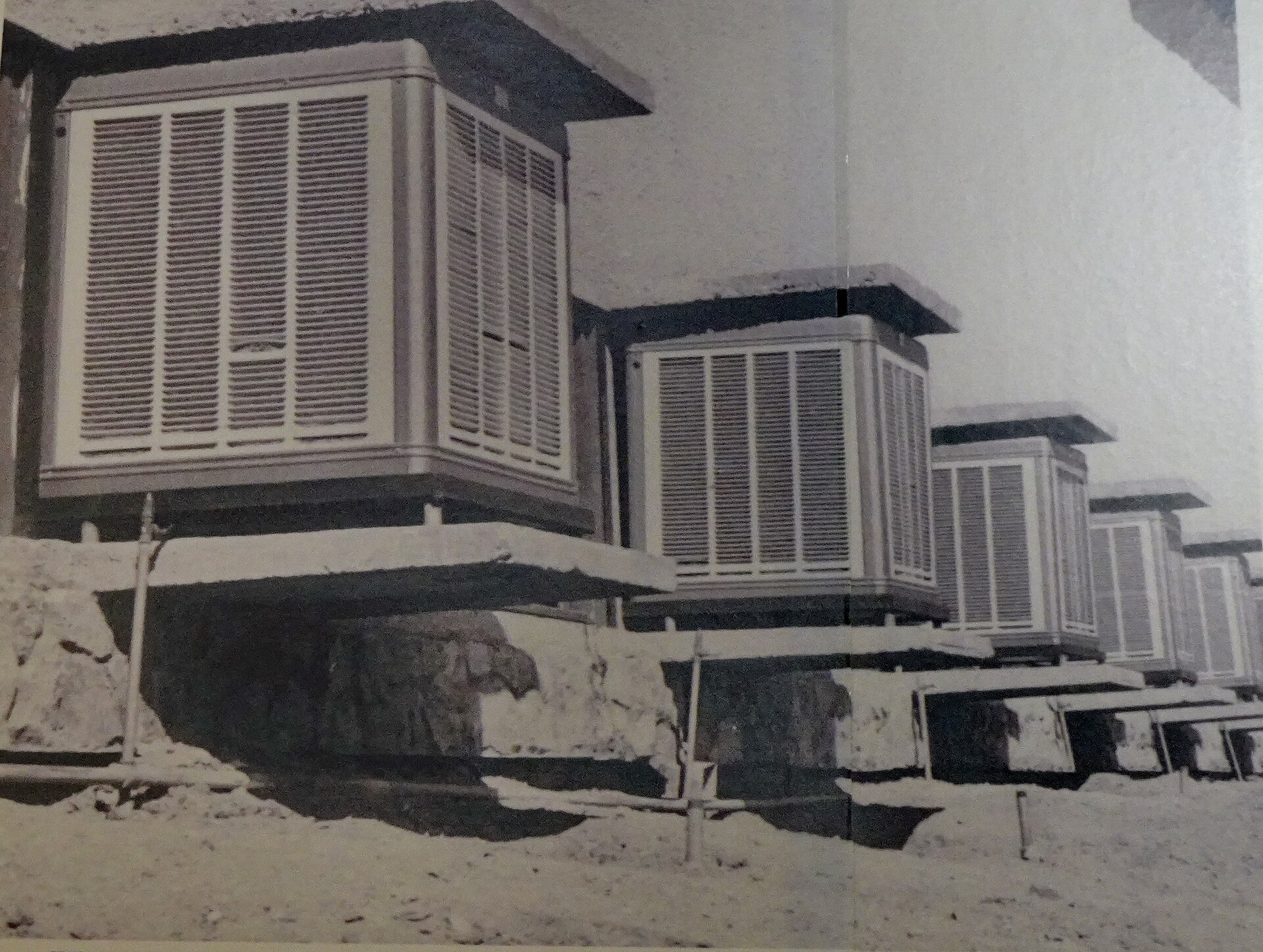
A factory, a packing shed and a farm workshop are not houses with bigger roofs. They are volumes. Air that would turn over a brick-veneer living room in a few minutes can sit under a metal ridge for half an hour, picking up heat from the cladding, the concrete and the forklift. Evaporative cooling still earns its keep in those spaces, but only if you treat it as a ventilation plant, not a domestic air conditioner that happens to sit on a portal frame.
The physics does not change. Outdoor air is drawn through wet pads; evaporation absorbs heat; the cooled, moist air must be able to leave. What changes is scale: airflow in the tens of thousands of litres per second, pad banks the size of a garage door, and a maintenance roster that cannot wait for the first hot Thursday in November. If the mechanism is unfamiliar, start there. This essay is about what happens when the same mechanism is asked to cool work.
High-volume spaces are a cubic-metre problem
Brochure tables for houses talk in square metres. A shed should be talked about in cubic metres and air changes. A 40 × 20 metre warehouse with a 6 metre eaves height is 4,800 m³ before anyone stacks pallets. Pushing that air through once every two or three minutes is a different machine from a rooftop unit sized for a 200 m² house.
Ceiling height is the first number people skip. Heat stratifies. A mezzanine office at 4 metres can be several degrees warmer than the floor, which is why a unit that “feels fine” near a roller door can leave the picker on the upper rack in a different climate. High discharge and a clear path to high relief openings — ridge vents, open clerestories, or doors on the opposite wall — matter more than a second thermostat.
Insulation is the second number. An uninsulated Colorbond roof on a still January afternoon is a radiant panel. Evaporative air can still drop the dry-bulb, but the load is brutal and the pads will drink. A foil or blanket under the roof, shade over western walls, and a pale roof colour do more for comfort than another half-size unit on the same dusty roof.
Spot cooling versus washing the whole shed
Not every workplace needs the whole volume cooled. A fabrication bay with two welders, a packing table, or a dairy pit can be treated as a cell. A high-velocity evaporative unit aimed at the work, with the rest of the shed left to extract heat through high openings, is often cheaper to run and easier to service than a ducted attempt to condition every pallet lane.
Spot cooling only works if the moist air can leave the cell. Pointing a portable or wall unit at a person in a closed lunch room just raises humidity. The same rule as a house: a window or door must stay open. In a shed that already runs with doors up, that is free. In a sealed cool-store anteroom or a laboratory, evaporative cooling is the wrong plant.
Whole-building wash is the other pattern: several roof or wall units pushing air in, relief at the far end, and enough throw to keep the occupied zone moving. The failure mode is obvious and common — units clustered on the office end because that is where the power board is, dead air at the far racking, and staff who bring in tower fans that fight the design.
Heat at work is not a comfort extra
Australian workplaces have a duty to manage heat. That is an occupational health and safety problem, not a perk. Evaporative cooling is one engineering control among others: shade, slower work, more breaks, cool water, and a stop-work trigger when the day is no longer safe. It does not replace those controls, and it does not create a sealed, refrigerated envelope that you can point to as “the air conditioning”.
The useful days are the dry ones — inland summer, a north wind, a wheatbelt afternoon when the wet-bulb sits well below the dry-bulb. On those days a well-watered pad bank can take a savage shed and make it workable. On a humid coast, or after a thunderstorm when the air is already wet, the same plant becomes a large fan. That is still better than still air, but it is not cooling, and it should not be sold as such. See where the climate still suits the machine.
Do not run the units during bushfire smoke. Outdoor air is the point of the system; smoke is outdoor air you do not want inside. Fan-only mode on a humid day is honest. Wet pads on a brown-sky day are not.
Older commercial units often have no useful thermostat. They run until someone switches them off. The plant is moving air and water, not holding a set-point like a reverse-cycle split.
Water, pads and maintenance at scale
A house cooler might evaporate on the order of 10–30 litres per hour in a humid coastal climate, or much more on a dry Perth afternoon. A commercial bank is a multiple of that. Bleed-off — the water dumped so salts do not crust the pads — often runs 11–20 litres per hour on older domestic systems and can be brought down toward 3 litres per hour on newer water-management kits. Scale those figures by pad area and you have a water bill, a drain, and in hard-water towns a sludge problem.
Pad maintenance is where commercial systems quietly fail. Dust from gravel yards, pollen, insects and mineral scale close the face. Air then takes the path of least resistance: gaps, dry corners, a warped frame. The motor still sounds busy. The air is no longer cooled. A householder notices in a week. A warehouse with a contractor who only visits in April may run a whole summer on tired pads.
A workable roster is dull and specific. Check the trough and pump weekly in season. Hose or replace pads on a calendar, not when they smell. Confirm bleed is flowing — Water Corporation’s old rule of thumb, a bucket half full in 30 minutes, is about 11 litres per hour, and is still a useful check on a single drain. Cover or isolate units in winter so the pads dry. Keep a spare pump and float on the shelf.
Hard water shortens pad life and clogs distributors. A bleed schedule that matches the salts in the town supply will save more comfort than a bigger motor. Recycled bleed onto a non-potable garden or a dust-suppression tank is common on farms and in goldfields towns; it is not a reason to skip bleed. Unbled water will salt the pads until they are decorative.
Power is the cheap part
Electricity for the fans is usually the small line on the bill. Water, pad replacement and the labour to get on the roof are the real running cost. That arithmetic is the same as a house, only larger — see electricity and water together rather than treating the kilowatt as the whole story.
What does change commercially is demand. Several large fans starting together can bump a small three-phase board. Staged start, a sensible speed strategy, and not running every unit because one corner feels warm will keep both the power bill and the pads in range. Night flush — running the fans after the sun is off the roof to dump stored heat — is free cooling in a dry climate and costs only the fan.
When refrigerated air is the honest answer
Some rooms should never see a wet pad: server closets, pharmaceutical stores, a sealed laboratory, any space that must hold a temperature and a humidity band. Food process areas that already run on refrigeration should not have evaporative air dumped into them. Offices inside a shed can be split-system rooms with the shed itself on evaporative plant — two jobs, two machines.
Humid coasts are a climate veto. If the workplace is in coastal Sydney, Brisbane, Cairns or Darwin in the wet, a commercial evaporative system will spend its life as an expensive fan. Inland New South Wales, the dry west of Queensland, the WA wheatbelt, Adelaide’s plains and much of inland Victoria are the opposite: the wet-bulb still has room, and the pad is doing real work.
Sizing still comes back to airflow, not a floor-area sticker. A commercial quote that only lists square metres is a domestic quote in a hi-vis shirt. Ask for litres per second, assumed air changes, relief openings, pad type, bleed rate and a maintenance inclusion. Then walk the shed on a hot day and see where people actually stand. The machine should be aimed at that, not at the empty volume above the racking.
A shed that can dump its air, keep its pads wet and clean, and treat heat as a safety problem will get more from evaporative cooling than a sealed warehouse chasing a house-like set-point. The unit on the roof is only the visible part of that system.
Frequently asked
- Can one rooftop evaporative cooler handle a whole warehouse?
- Rarely. A house-sized unit is built for a sealed ceiling and a few open windows, not a 6–10 metre ridge and roller doors that stay open all day. Most sheds need several high-volume units, or a smaller machine aimed at a work cell, plus make-up air that can actually leave the building.
- How often do commercial pads need changing?
- In dusty yards and hard-water towns, inspect pads every season and budget to replace them more often than a suburban house would. Scale, dust and pollen clog the face; a neglected pad raises water use, drops airflow and can leave a damp smell that staff will report before the thermometer does.
- Is evaporative cooling enough to meet heat duties at work?
- It is one control, not a complete heat-management plan. Shade, rest breaks, cool drinking water, task rotation and a way to stop work in extreme conditions still matter. A wet-pad system helps most on dry, windy days and least when the wet-bulb is already high.
More from Systems

Systems · 17 February 2025
What to look for when buying an evaporative cooler
A useful quote names airflow, water management, pad type and who will service the roof. Brand names describe the Australian market; they are not a ranking.
Systems · 3 February 2025
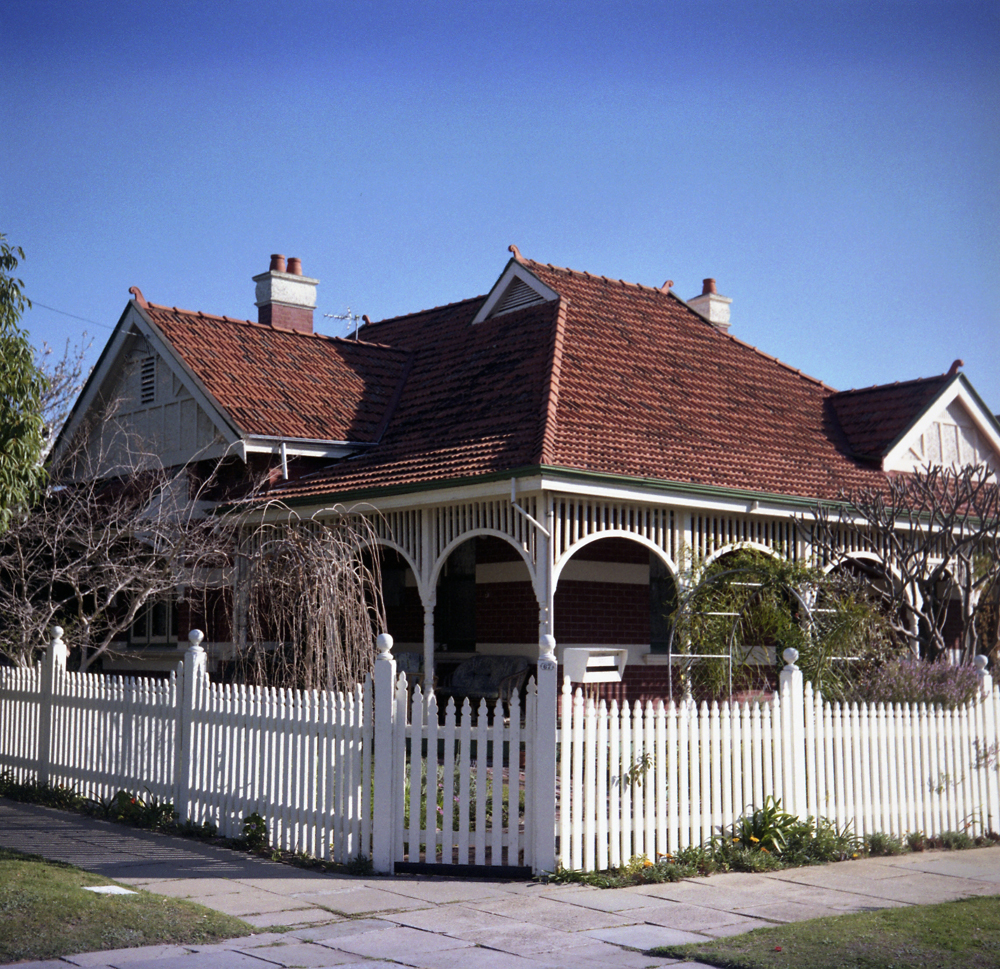
How to size an evaporative cooler for an Australian house
Floor area is a starting guess, not a size. Airflow, ceiling height, insulation and leaky ducts decide whether a rooftop unit can actually cool the rooms you live in.
Systems · 8 January 2025
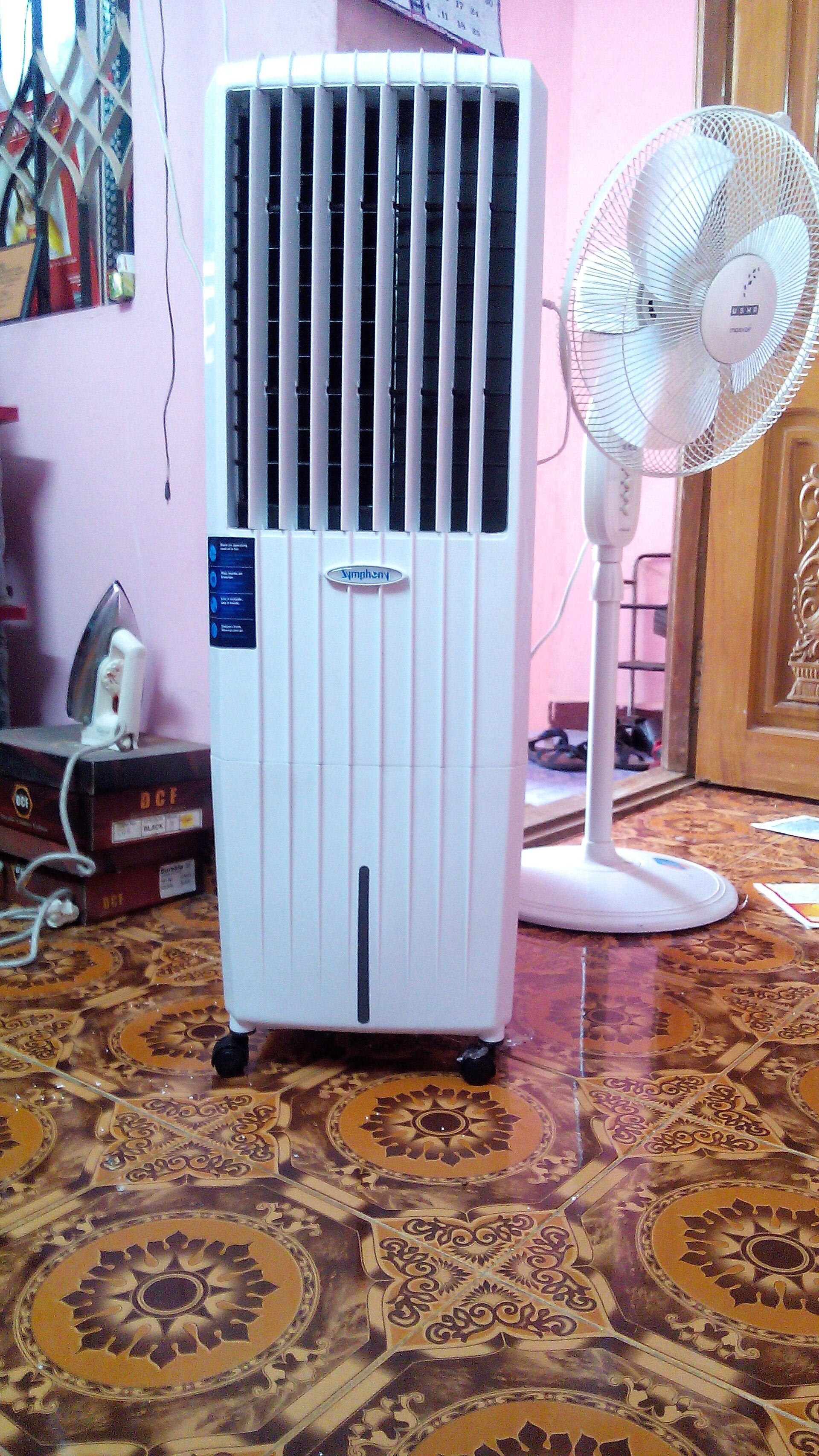
Window and wall evaporative cooling units
A through-wall or window evaporative cooler sits between a portable and a ducted roof system: roughly 30 to 50 square metres, a hole in the masonry, and a noise profile the neighbours will have an opinion about.