Where evaporative cooling works in Australia
The machine follows the wet-bulb, not the state border. Dry interiors still suit a rooftop pad; humid coasts mostly buy a fan. A Bureau of Meteorology climate page will tell you which house you have.
Published 3 March 2025 · Updated 3 February 2026
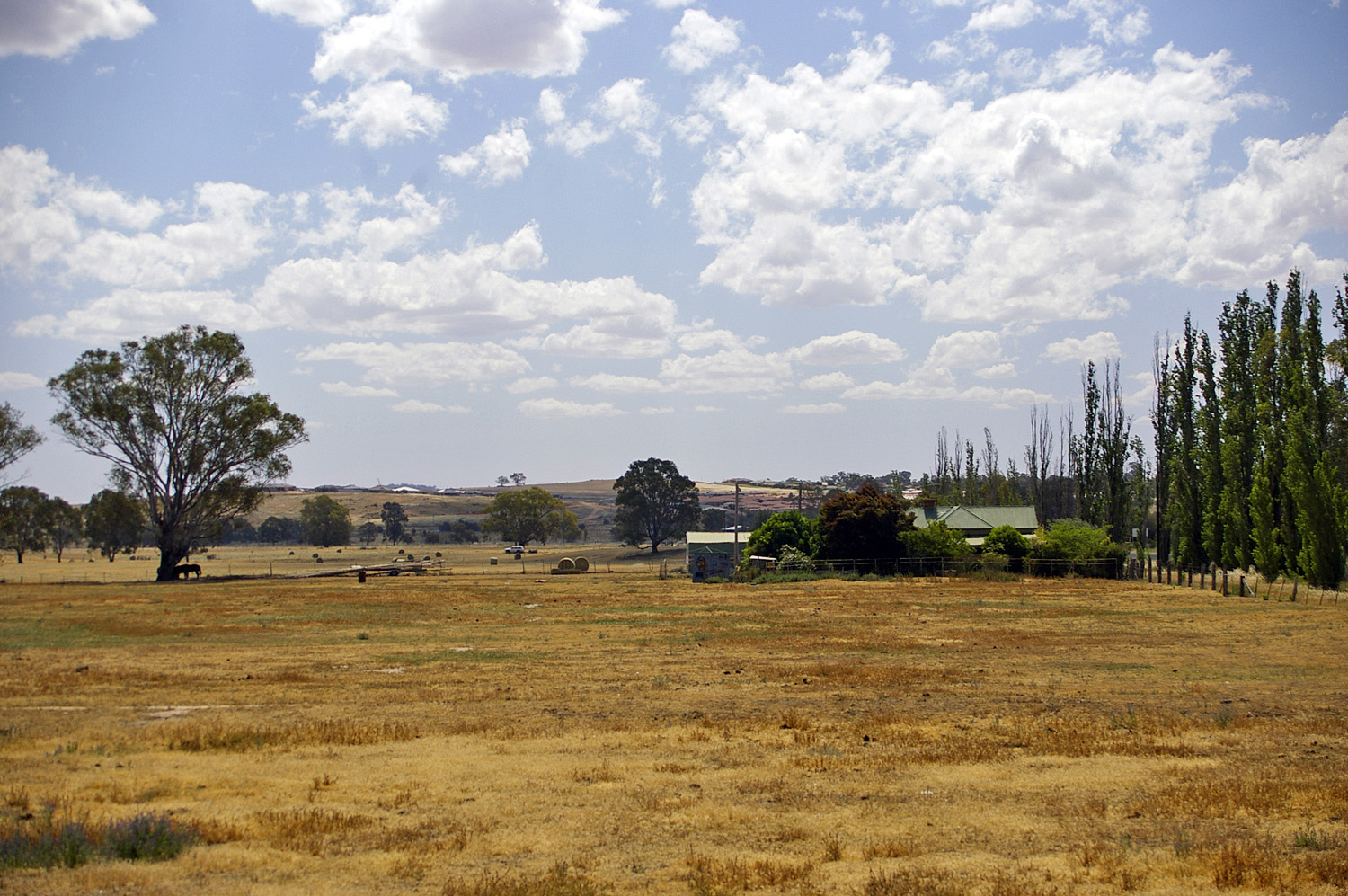
Evaporative cooling is a climate technology pretending to be an appliance. The box on the roof is the same in Broome and Ballarat. The air is not. A pad can only dry-bulb the incoming stream toward the wet-bulb. When those two numbers are far apart — a hot, dry afternoon — the house feels the drop. When they sit on top of each other — a muggy coastal night — you have bought a fan and a water bill.
That is the whole map, if you are willing to read it that way. State borders, postcodes and “we’ve always had one” are weaker guides than a Bureau of Meteorology climate page and a honest walk through your own January.
The physics is short. Outdoor air is pulled through wet pads; evaporation absorbs heat; the moist air must leave through open windows. How that loop works does not change with latitude. Suitability does.
Wet-bulb, not the afternoon maximum
People buy coolers after a 43 °C day. They should buy them after looking at humidity on that day, and on the fortnight around it. A dry 43 °C in Mildura and a humid 35 °C in Brisbane are different jobs. The first has room for evaporation. The second is already close to the limit of what a pad can do.
Wet-bulb temperature is the practical number. You will not find it on every app tile, but you can infer the gap: high temperature and low relative humidity means a useful depression; high temperature and high humidity means the pad is largely ornamental. BOM site data, a simple weather station, or even the way washing dries on the line will tell you more than a showroom sticker.
Fan-only mode exists for the days when the gap closes. Running water over the pads then just raises indoor humidity. Humidity and fan-only is the operating rule for the edge of the map. It is also a clue that you may be on the wrong side of it.
The dry interiors
The country that still suits a rooftop unit is the dry half: the western and southern wheatbelts, the inland slopes, the pastoral plains, the desert towns. Perth’s metropolitan coastal plain, for all its sea breeze, still spends enough of summer in dry easterlies that evaporative cooling is ordinary plant. Adelaide’s plains likewise. Inland Victoria — Shepparton, Mildura, Bendigo and the dry north-west — kept the machines when the inner city started to argue with them. The western slopes and plains of New South Wales, and the dry Queensland west around centres such as Longreach, are the same story: heat with room underneath it.
In those places a ducted unit is not nostalgia. It is a way to move a lot of air through a house that can be left open, at a water and power cost that still looks sane next to refrigerated tonnes. The house has to cooperate: insulation, shade, and windows that actually open. Climate gives you the depression. The house spends it.
The humid coasts
Sydney, the NSW north coast, Brisbane, the Queensland wet tropics and Darwin in the wet season are poor evaporative climates for a whole house. The air arriving at the pad is already carrying water. You can run the fan. You should not expect a refrigerated-style drop, and you should not run the pump on the worst nights.
A portable in a single room, with a window open, is the honest coastal use. Wall and window machines can take a studio or a shopfront on the odd dry westerly. Ducted rooftop plant on a humid coast is how a house acquires a mossy smell and a water bill without acquiring comfort.
Bushfire smoke is a veto everywhere. The system is a hole to the outdoors. When the sky is brown, switch it off. That is not a climate zone. It is a day.
A map in words
Think in bands, not in hope.
Usually suitable: the Perth coastal plain and the WA wheatbelt; Adelaide and much of inland South Australia; inland Victoria; the NSW slopes and west; western Queensland. These are the climates this journal treats as home ground. Separate essays take Perth and Adelaide in more detail.
Marginal: Melbourne’s inner and bayside suburbs; the near-coastal strips of South Australia’s south-east; the eastern edges of the NSW tablelands when a humid easterly sits for days; Hobart, where the cooling load is smaller and the air is often already moist. In these places a unit that already exists can be worth running on the right afternoon. Installing a new ducted system as the only summer plant is a bet on the dry days.
Usually poor: humid east-coast cities, the wet tropics, Darwin’s wet. Refrigerated air, shade, and a house that can be closed are the honest tools. An evaporative cooler here is a fan you have to fill.
The bands move with the week. A dry northerly into Melbourne can make a forgotten rooftop unit feel like Mildura for a day. A sea-breeze change into Adelaide can close the gap by late afternoon. Suitability is a season and a wind direction, not a postcode tattoo.
What a BOM climate page is for
The Bureau’s site pages — monthly means of maximum temperature and, where published, humidity and wet-bulb — are more use than a sales map coloured in brand colours. Look at January and February first. Look at three in the afternoon, not the overnight minimum. Look at how often humid air arrives from the sea.
You are trying to answer a plain question: on the days I will want cooling, is the air dry enough that a pad can work? If the answer is “most afternoons, yes”, you are in the suitable band. If the answer is “only when the wind is from the inland”, you are marginal and should size your expectations, and your water, accordingly. If the answer is “almost never”, do not let a square-metre table talk you into a roof penetration.
Local knowledge still counts. A street in the Adelaide Hills is not the Adelaide plains. Fremantle is not Midland. A house among irrigated orchards can sit in a more humid pocket than the BOM station 20 kilometres away on bare ground. Walk outside at 3 pm in February. If the air feels dry in your throat, a pad has something to work with. If it feels like a bathroom after a shower, it does not.
Living with the edge
Plenty of Australian houses already have a unit from a drier decade. The climate did not always move; the suburbs did. Infill, sealed windows, and a habit of treating every room like a reverse-cycle box have made marginal climates feel worse than they are. Opening the house is still part of the method.
On the right side of the map, evaporative cooling remains one of the few ways to cool a whole house without a large electrical load. On the wrong side, it is a story people tell about a machine their parents had. The wet-bulb does not care which story you prefer. It only cares whether the air can still take on water.
Read the climate you actually live in, including the wind that arrives at 4 pm. Then decide whether a pad on the roof is a system or a souvenir.
Frequently asked
- Does evaporative cooling work in Sydney or Brisbane?
- Poorly, for most of the warm season. Those coasts already carry enough moisture that a wet pad has little left to evaporate. You get air movement and a small drop on the driest afternoons. Inland from the divide, or west of the ranges, the same machine starts to earn its keep.
- What is wet-bulb temperature and why does it matter?
- Wet-bulb is the temperature a well-ventilated thermometer reads when its bulb is wrapped in a wet wick. It is the floor that evaporative cooling can approach. When the wet-bulb sits close to the dry-bulb, the air is already humid and a pad cannot do much work.
- Which Australian cities still suit a rooftop evaporative cooler?
- Perth and Adelaide remain the large-city strongholds. Inland Victoria, the western slopes and plains of New South Wales, and western Queensland still use them as everyday plant. Melbourne is marginal in the suburbs and more useful further inland. Darwin, Cairns and the humid east coast are the wrong climate for a wet pad as the main system.
More from Climate

Climate · 26 May 2025
Humidity, wet-bulb temperature and fan-only mode
When outdoor air is already holding water, wet pads stop cooling and start humidifying. Kill the pump, feel the change, and wait out a storm-front afternoon.
Climate · 12 May 2025
Evaporative cooling in Queensland: dry inland versus the coast
Longreach, Roma and Toowoomba can still justify a wet-pad cooler. Brisbane, Cairns and the wet-season coast generally cannot.

Climate · 28 April 2025
Evaporative cooling in inland New South Wales
Why Dubbo, Wagga Wagga, Orange and Broken Hill still suit wet-pad cooling, and why the same machine is a poor match for Sydney humidity.