Evaporative cooling in Melbourne and inland Victoria
Melbourne’s climate is marginal for a wet pad; Shepparton, Mildura and Bendigo still use them because the inland northerly is a different air mass from a humid south-easterly on the bay.
Published 14 April 2025 · Updated 3 February 2026
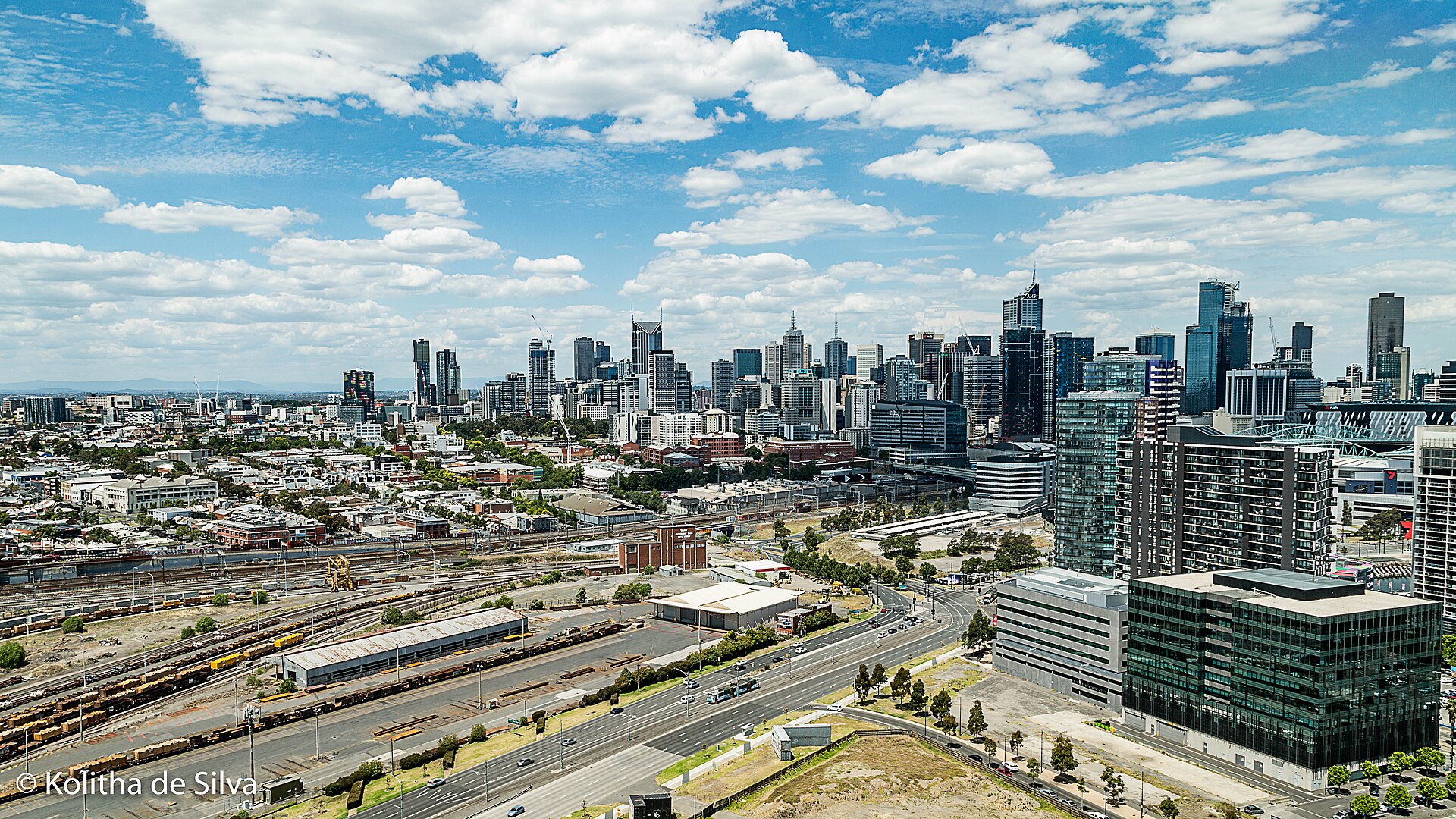
Melbourne is where evaporative cooling goes to be argued about. The city is cool enough, often enough, that a lot of houses never needed a wet pad. It is also capable of a 43 °C northerly that makes a forgotten rooftop unit feel like a mercy. Between those poles sits a humid south-easterly, a sealed renovation culture, and a generation of split systems. The result is a marginal climate that still has thousands of cabinets on roofs, and a countryside to the north that never got the memo that the technology had gone out of fashion.
The map in where evaporative cooling works puts Melbourne in the middle band and inland Victoria in the useful one. The rest is wind direction.
Why the city is marginal
Port Phillip is a humidity machine. A south to south-easterly off the water raises moisture and knocks the temperature back. On those days a pad has little left to evaporate. You can move air. You should not expect a dry-city drop. Inner and bayside suburbs feel this most. The urban forest and the bay are doing a job; the cooler is mostly in the way if the pump is still on.
The other Melbourne is the northerly: inland air, high dry-bulb, a sky that looks like Mildura for a day or two. Then the pad works. Houses in the west and north — Sunshine, Werribee, Craigieburn, the old evaporative belt — were built in a period when that day was treated as the design day. A unit sized and serviced for it will still perform. A unit asked to handle a muggy February week will not, and should not be blamed for a climate it was not given.
Sealed houses made the margin worse. Evaporative cooling needs relief. A renovation that shut the windows, added downlights through the ducts, and taught everyone to expect 22 °C behind a closed door is a reverse-cycle house. Putting a wet pad on that roof is a category error. The climate was already borderline. The building habit pushed it over.
Northerlies and the south-easterly
Learn the two winds, then operate the machine for the one you have.
A northerly or north-westerly in summer is dry heat. Wet the pads, open the south and east if you can, and let the air leave. This is the day the unit was bought for. It may only be a handful of days in a mild year and a brutal fortnight in another. Frequency is not the test of whether the physics works; the wet-bulb on that afternoon is.
A south-easterly is often the change. Temperature falls, humidity rises, and the house can be opened to the breeze. Switch to fan-only, or off. People who leave the pump on through a change then complain that “Melbourne evaporative doesn’t work” have sampled the climate at its least suitable moment.
Still, humid nights are the third case. The pad will not save a bedroom that cannot dump moisture. A portable in a room with a window, or a small split for sleep, is how a lot of mixed houses get through those nights without pretending the rooftop unit is a heat pump.
Bushfire smoke, when it sits over the city, is a fourth case with only one setting: off. The system is outdoor air. Smoke is not cooling.
Inland Victoria: Shepparton, Mildura, Bendigo
Drive north and the argument thins. Mildura in a heatwave is a dry-city problem. Shepparton and the Goulburn Valley mix irrigation humidity with days that are still far closer to Adelaide’s plains than to St Kilda. Bendigo and the inland goldfields towns sit in between: hot, often dry, with enough of a genuine cooling season that a rooftop unit is ordinary plant, not a hobby.
These towns kept evaporative cooling for the same reason Perth and the WA wheatbelt did. The alternative is a large electrical load in a climate that still offers a wet-bulb gap. Houses, motels, clubs and sheds run the machines because they work on the days that matter. Irrigation can lift local humidity near wet paddocks and channels; it does not turn Mildura into a coast.
Hard water and dust are the inland tax, as they are in regional South Australia. Pads need a roster. Bleed needs to be real. A winter cover still matters through a Victorian winter that is actually wet. The maintenance is not more exotic than a house on the Adelaide plains. The heat is simply more reliable.
Spot cooling in a packing shed or a workshop is often the smarter commercial pattern than trying to wash a huge volume under hot iron. The house next door can still be ducted. They are different volumes.
The sealed-house problem, and water
A Melbourne terrace that cannot open without losing the cat, or a new estate house with one token window in a bedroom, will not run evaporative cooling well on any wind. Fix the openings or choose another system. This is not a product complaint.
Water use in Victoria will not match Water Corporation’s Perth illustration on most days — around 100 litres per hour in hot weather, about 30,000 litres a year at six hours a day for 50 days — because the useful evaporative season is shorter and often moister. On a true northerly heatwave the litres can climb toward dry-city figures. CHOICE’s citation of a 2009 study (67–116 litres per hour in Adelaide, 41–70 in Hobart) is a reminder that named climates differ. Melbourne sits nearer the moist end of that conversation than Mildura does.
Bleed on older units often runs 11–20 litres per hour; newer kits can be closer to 3. Restrictions, when they come, will treat a leaking cooler as they treat a leaking tap. Read the rules as rules, and read the bill as water plus power. Electricity will still be the smaller line if the fan is the only compressor you own.
When to keep the unit and when to stop arguing
Keep it if you live inland, or in a western or northern suburb, and the house still opens, and you are willing to switch the pump with the wind. Service the pads, fit the winter cover, close the ceiling vents in May. Use it as a climate instrument.
Think hard before installing a new ducted system in bayside or inner Melbourne as the only summer plant. The dry days will flatter you. The rest of the season will not. A split system, shade, and a ceiling fan are not a moral failure in a marginal city.
Do not keep a rotting cabinet because a previous owner had one. An unserviced unit in a sealed house is a damp box. Removing it and patching the roof is a better essay than another January of smell and disappointment.
Victoria is two evaporative climates sharing a border and a football league. The inland still has the air a pad can use. The city has it on some afternoons, when the northerly is in, and loses it when the bay sends the south-easterly. Operate the machine for the air mass you have, not for the postcode printed on the quote.
Frequently asked
- Is it worth installing ducted evaporative cooling in Melbourne?
- Only with clear eyes. The city has enough humid, still days that a new rooftop unit is a bet on the dry northerlies, not a whole-summer solution. If the house already has one, use it on those days and switch to fan-only or off when a moist south-easterly arrives. Inland, the bet is better.
- Why do Mildura and Shepparton still use evaporative coolers?
- They sit in a drier, hotter inland air. The wet-bulb gap on a 40-plus afternoon is the gap a pad can use. Melbourne’s bay and ranges interrupt that air more often. Same state, different machine weather.
- What should I do when the wind turns south-easterly?
- Treat the cooler as a fan, or turn it off and open the house to the change. A moist south-easterly has already done some of the cooling and has left less evaporation for the pads. Running the pump then makes rooms feel close rather than cool.
More from Climate

Climate · 26 May 2025
Humidity, wet-bulb temperature and fan-only mode
When outdoor air is already holding water, wet pads stop cooling and start humidifying. Kill the pump, feel the change, and wait out a storm-front afternoon.
Climate · 12 May 2025
Evaporative cooling in Queensland: dry inland versus the coast
Longreach, Roma and Toowoomba can still justify a wet-pad cooler. Brisbane, Cairns and the wet-season coast generally cannot.

Climate · 28 April 2025
Evaporative cooling in inland New South Wales
Why Dubbo, Wagga Wagga, Orange and Broken Hill still suit wet-pad cooling, and why the same machine is a poor match for Sydney humidity.